
Table of Contents
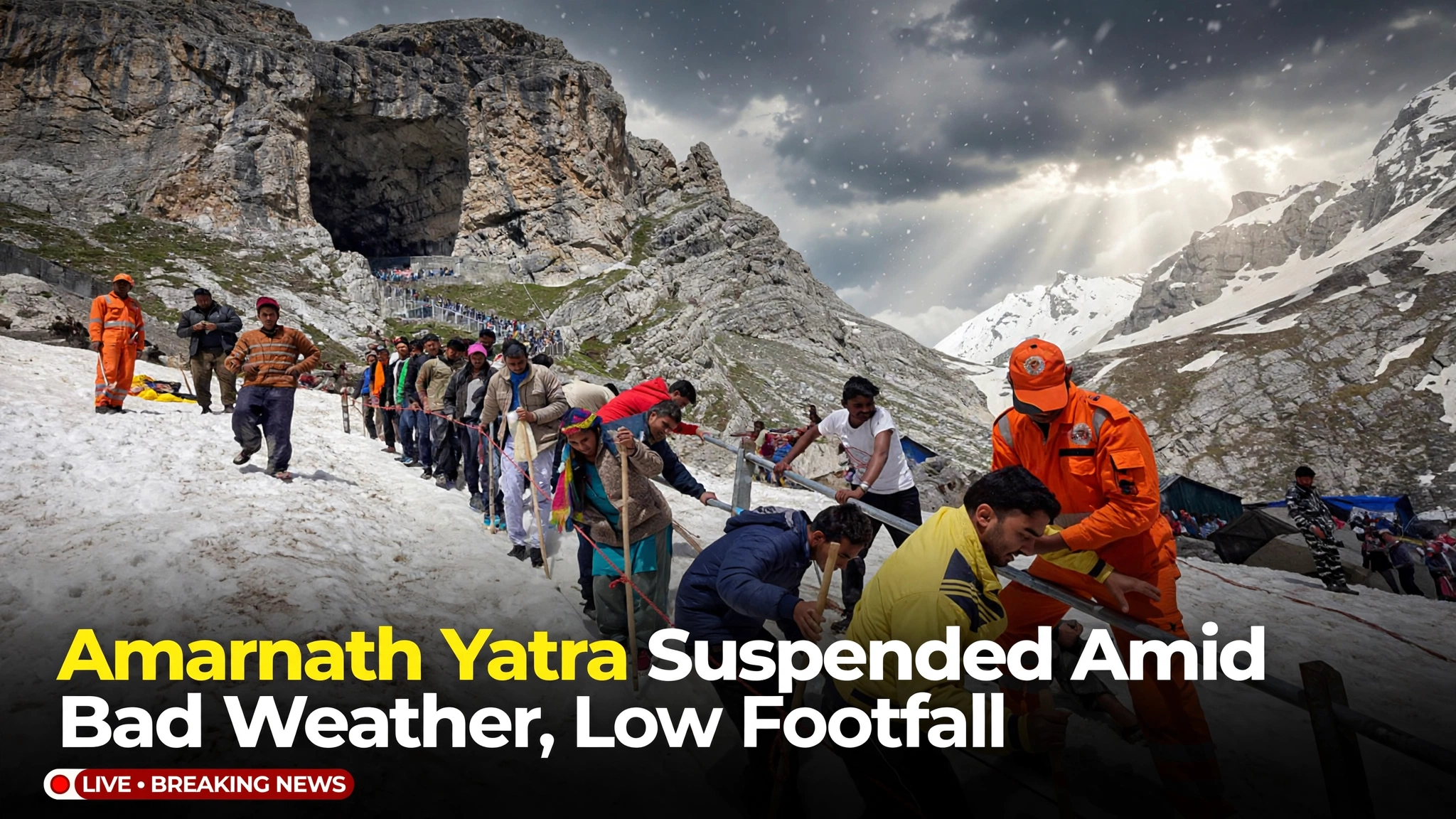
The Amarnath Yatra has been suspended from Jammu amid severe weather conditions and a noticeable decline in the number of pilgrims arriving for the annual pilgrimage. The decision comes as authorities prioritize the safety of devotees travelling toward the Amarnath cave shrine in the higher reaches of Jammu and Kashmir.
The suspension highlights the challenges of conducting one of India’s most significant annual pilgrimages in difficult mountain weather, where heavy rain and rapidly changing conditions can affect roads, trekking routes and overall movement.
Why Has the Amarnath Yatra Been Suspended?
The immediate reasons behind the suspension are inclement weather and declining pilgrim arrivals.
Mountain weather can change quickly, making travel conditions unpredictable. Authorities have to consider not only the safety of pilgrims already on the route but also the risks involved in allowing new groups to begin their journey.

The suspension provides authorities with an opportunity to assess conditions before normal movement resumes.
What Does the Suspension Mean for Pilgrims?
Pilgrims planning to travel from Jammu should check the latest official instructions before proceeding.
A suspension can affect:
- Departure of new pilgrim groups
- Transport arrangements
- Route access
- Security deployment
- Accommodation and registration plans
Travellers should avoid relying solely on social media updates, particularly during weather-related disruptions. Official advisories should be treated as the primary source for information about resumption.
Weather Is a Major Factor in the Amarnath Pilgrimage
The Amarnath shrine is located at a high altitude, making weather an important part of pilgrimage planning.
Heavy rain and adverse conditions can create challenges including:
- Slippery trekking routes
- Reduced visibility
- Landslide risks
- Road disruptions
- Difficult transport conditions
- Delays in emergency response
For authorities, even a temporary deterioration in conditions can justify pausing pilgrim movement.
Declining Footfall Adds Another Dimension
The suspension is also linked to a noticeable decline in pilgrim arrivals.
Lower footfall can reduce pressure on roads, accommodation facilities, security personnel and other support infrastructure during difficult weather.
For the wider tourism economy, however, fewer visitors can have a direct impact on local businesses that depend on the annual pilgrimage season.
Why the Amarnath Yatra Matters to the Local Economy
The pilgrimage supports a large ecosystem of businesses and workers.
These include:
- Hotels and guesthouses
- Transport operators
- Food vendors
- Pony and porter services
- Tour operators
- Local shops
- Travel and hospitality businesses
A disruption to the pilgrimage can therefore affect more than devotees. It can also influence the livelihoods of people who depend on seasonal tourism.
Safety Remains the Priority
Large-scale pilgrimages in mountainous regions require careful coordination between authorities, security agencies, medical teams and local administration.
When weather conditions deteriorate, continuing the movement of thousands of pilgrims can increase operational risks.
A temporary suspension is therefore primarily a safety measure rather than an indication that the pilgrimage has been permanently halted.
What Should Pilgrims Do Next?
People planning to undertake the pilgrimage should:
- Check official advisories before travelling.
- Confirm whether new pilgrim movement has resumed.
- Monitor weather conditions.
- Keep accommodation and transport plans flexible.
- Follow instructions issued by local authorities.
Pilgrims already travelling should follow instructions from officials and avoid attempting to bypass restrictions.
What Happens When the Yatra Resumes?
Once weather conditions improve and authorities determine that routes are safe, pilgrim movement can resume in a controlled manner.
The timing will depend on ground conditions, route accessibility and the overall safety assessment.
Given the terrain, authorities are likely to prioritize safe movement rather than rushing to restore normal operations.
Final Thoughts
The Amarnath Yatra suspended situation underlines how closely pilgrimage and weather conditions are connected in Jammu and Kashmir’s mountainous terrain. With severe weather affecting movement and pilgrim arrivals declining, authorities have chosen to pause the journey from Jammu while conditions remain challenging.
For pilgrims, the key message is straightforward: check official updates before travelling and follow all safety instructions. For the local tourism sector, the disruption also highlights the importance of reliable infrastructure and contingency planning during the region’s busiest pilgrimage periods.
FAQ
Why has the Amarnath Yatra been suspended?
The Yatra has been suspended from Jammu due to severe weather conditions and a noticeable decline in pilgrim arrivals.
Is the Amarnath Yatra permanently cancelled?
No. A weather-related suspension is temporary and does not mean the annual pilgrimage has been permanently cancelled.
Should pilgrims travel to Jammu during the suspension?
Pilgrims should check official advisories before travelling and confirm whether new pilgrim movement has resumed.
How does bad weather affect the Amarnath Yatra?
Heavy rain and adverse mountain conditions can affect roads, trekking routes, visibility and overall safety.
Why is the Amarnath Yatra important for local businesses?
The pilgrimage supports hotels, transport operators, food vendors, pony and porter services, shops and other tourism-related businesses across the region.

