
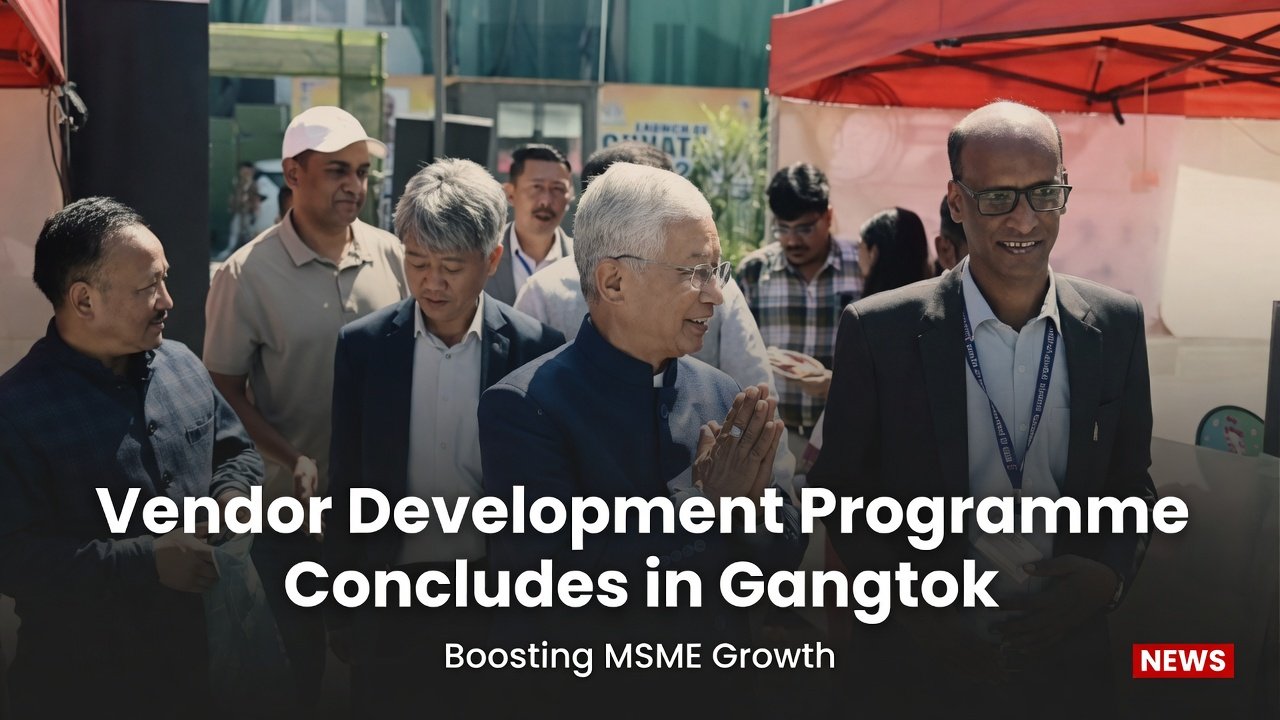
Vendor Development Programme and Buyer-Seller Meet Concludes in Gangtok, Strengthening MSME B2B Opportunities
The Vendor Development Programme in Gangtok has concluded after a two-day initiative aimed at strengthening business-to-business (B2B) connections and creating new market opportunities for micro, small and medium enterprises (MSMEs).
The programme brought together MSMEs, buyers and other business stakeholders with the objective of improving vendor integration and helping smaller businesses connect with potential customers and larger commercial networks.
Focus on MSME Market Access and B2B Integration
For small businesses, gaining access to established buyers can be one of the biggest challenges to expansion. Vendor development programmes and buyer-seller meets are designed to address this gap by creating direct interaction between enterprises and prospective purchasers.
The Gangtok programme focused on this aspect by providing MSMEs with opportunities to understand buyer requirements, explore commercial relationships and identify potential avenues for business growth.
The emphasis on MSME B2B integration is particularly relevant for micro and small enterprises looking to move beyond local markets. Stronger connections with institutional and corporate buyers can help businesses develop more consistent demand and expand their customer base.
Buyer-Seller Interaction Creates New Business Opportunities
A key component of the two-day event was the buyer-seller interaction. Such meetings allow sellers to present their products and capabilities directly to prospective buyers while giving purchasing organisations an opportunity to identify suitable suppliers.
Direct engagement can also help MSMEs better understand specifications, quality expectations, pricing considerations and procurement requirements.
For smaller enterprises, this kind of exposure can be valuable because it provides insights into how larger buyers evaluate vendors and what businesses need to do to become part of organised supply chains.
Supporting Micro-Business Scaling
The programme also highlighted the importance of helping micro-businesses move from small-scale operations toward more structured and sustainable growth.
Micro enterprises frequently face challenges related to market visibility, customer acquisition, business networks and access to larger procurement opportunities. Connecting these businesses with buyers can help address some of these limitations.
The Vendor Development Programme in Gangtok therefore served as a platform for businesses to explore opportunities beyond their existing networks and consider new routes for expansion.
Business growth can also create secondary benefits, including additional employment opportunities, stronger local supply chains and increased participation of small enterprises in formal commercial activity.
Why Vendor Development Matters for MSMEs
Vendor development initiatives are important because MSMEs form a broad base of suppliers across manufacturing, services, trading and other sectors.
However, having a viable product or service does not always guarantee access to large buyers. Businesses may need support in areas such as product presentation, compliance, quality standards, pricing and procurement processes.
Buyer-seller meets can help bridge this information and networking gap.
By bringing buyers and suppliers together in one forum, these programmes can reduce the distance between MSMEs and potential markets while encouraging direct business discussions.
Gangtok Event Highlights Importance of Local Enterprise Networks
The completion of the two-day event in Gangtok also underscores the role of regional business ecosystems in supporting MSME development.
Local enterprises can benefit from stronger connections with buyers, suppliers, institutions and other businesses operating outside their immediate markets. Such networks can create opportunities for partnerships and help smaller companies understand broader commercial requirements.
For businesses in and around Sikkim, initiatives centred on MSME market access can therefore provide an avenue to explore larger procurement and B2B opportunities.
From Networking to Long-Term Business Relationships
While a buyer-seller meet provides an initial platform for interaction, the long-term value of such programmes depends on what happens after the event.
MSMEs can use the contacts and knowledge gained during the programme to follow up with prospective buyers, improve their offerings and work toward establishing recurring business relationships.
For buyers, engaging with MSMEs can broaden the supplier base and provide access to specialised products and services from smaller enterprises.
This makes vendor development more than a networking exercise. It can become part of a broader effort to integrate smaller businesses into organised supply chains.
MSME Growth Through Better Market Connectivity
The Gangtok programme reflects a wider need for stronger connectivity between small businesses and markets.
Access to finance remains important for MSME development, but market access is equally significant. A business needs customers and sustainable demand to convert investment into long-term growth.
Programmes focused on micro-business scaling can help address this challenge by connecting entrepreneurs with buyers and providing greater exposure to commercial opportunities.
For participating enterprises, the event could therefore serve as a starting point for new B2B relationships, partnerships and potential orders.
FAQs
1. What was the Vendor Development Programme in Gangtok?
The Vendor Development Programme in Gangtok was a two-day initiative focused on connecting MSMEs with buyers and strengthening B2B business opportunities.
2. What was the main objective of the programme?
The programme focused on improving market access, encouraging buyer-seller interaction and supporting the growth of micro, small and medium enterprises.
3. What is a buyer-seller meet?
A buyer-seller meet is a business networking platform where suppliers and prospective buyers interact directly to discuss products, services, procurement requirements and potential commercial relationships.
4. How can MSMEs benefit from buyer-seller meets?
MSMEs can use buyer-seller meets to identify prospective customers, understand procurement requirements, showcase their capabilities and develop new B2B connections.
5. Why is B2B integration important for small businesses?
B2B integration can help small businesses access larger customer networks, participate in supply chains and develop more consistent commercial opportunities.
6. What challenges do micro-businesses commonly face?
Micro-businesses can face challenges involving market access, customer acquisition, financing, visibility, compliance and connections with larger buyers.
7. Can vendor development programmes help businesses scale?
Yes. By improving connections between suppliers and buyers, vendor development initiatives can create opportunities that may support business expansion and more sustainable growth.
8. Why was Gangtok significant as the location for the programme?
Holding the programme in Gangtok provided a platform for MSMEs in the region to interact with buyers and explore opportunities for broader market participation.
9. What happens after a buyer-seller meet?
Businesses can follow up with prospective buyers, submit proposals or samples, address procurement requirements and work toward establishing longer-term commercial relationships.
10. How can MSME market access support the wider economy?
Greater market access can help small enterprises increase sales, expand operations, strengthen supply chains and potentially create additional employment opportunities.
- Rituraj Kushwaha (Redeye): The Young Creator Turning Raw Moments into Powerful Content
- ‘This Has to Stop’: JPMorgan CEO Jamie Dimon Outlines How to Run a Successful Meeting
- 24Rox: Lucknow’s Best Website Design & Digital Marketing Solutions | SEO, Ecommerce & Social Media Experts
- Jewelbox, a lab-grown diamond brand based in Kolkata, has secured USD 3.2 million.

