
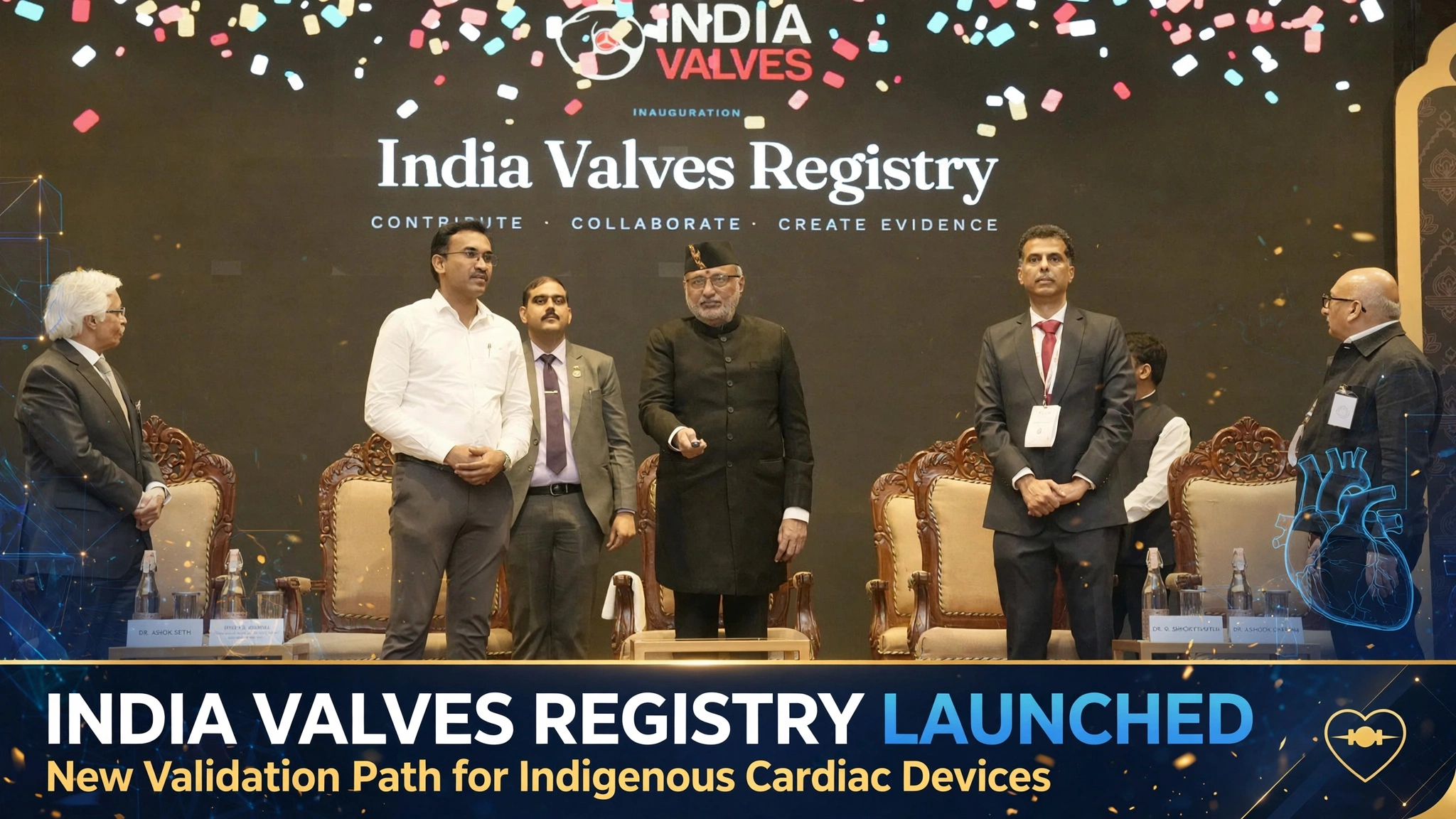
India Valve Registry Opens New Clinical Validation Path for Indigenous Cardiac Devices
The India Valve Registry is emerging as an important development for India’s growing MedTech and biomedical engineering ecosystem, with its national rollout creating a structured clinical validation database focused on cardiac valve care.
The initiative is expected to provide valuable clinical data that can support researchers, hospitals, medical device manufacturers and startups working on indigenous cardiac technologies.
For India’s domestic MedTech sector, access to reliable clinical information can be particularly important when developing and validating new medical devices designed for Indian patients.
What Is the India Valve Registry?
The India Valve Registry is designed to create a national repository of information related to patients undergoing treatment for heart valve conditions.
Heart valve diseases can require long-term monitoring and, in serious cases, surgical or interventional procedures involving replacement or repair of damaged valves.
A centralized registry can help researchers and clinicians understand disease patterns, treatment approaches and patient outcomes across different regions.
Such information can also provide an evidence base for improving future cardiac care.
Why Clinical Data Matters for MedTech
Developing a medical device is different from creating a conventional consumer technology product.
Cardiac devices must undergo extensive testing and clinical validation before they can be widely adopted.
Access to high-quality clinical data can help researchers understand the requirements of patients and identify areas where existing technologies could be improved.
For Indian MedTech startups, this information could support the development of devices specifically suited to the country’s patient population and healthcare environment.
Boost for Indigenous Cardiac Device Development
The rollout of the India Valve Registry could contribute to India’s broader push toward indigenous medical technology.
Domestic startups and biomedical engineering companies are increasingly working on technologies intended to reduce dependence on imported medical devices.
Cardiac care represents an important opportunity within this sector because heart disease remains a major healthcare challenge.
A stronger clinical research ecosystem could help Indian companies develop products based on locally relevant medical requirements.
Opportunities for Indian MedTech Startups
Startups working on cardiac devices often face several challenges during the product development process.
These can include research costs, access to hospitals, clinical trials, regulatory requirements and the need to demonstrate safety and effectiveness.
A national clinical database can potentially help researchers identify patient populations and generate insights that inform device development.
It can also encourage closer collaboration between hospitals, academic researchers and medical technology companies.
Supporting Biomedical Engineering
Biomedical engineers play an important role in developing technologies that connect medicine with engineering.
Their work can include designing artificial valves, monitoring systems, surgical technologies and other devices used in cardiac treatment.
Clinical data can help engineers understand how medical devices perform in real-world settings and where improvements may be necessary.
The India Valve Registry could therefore become a useful resource for researchers working at the intersection of medicine, engineering and technology.
Indigenous Technology Could Reduce Import Dependence
India has historically relied significantly on imported medical devices in several specialized healthcare categories.
Developing indigenous alternatives could potentially improve supply resilience and create opportunities for Indian manufacturers.
Domestic production can also allow companies to design devices around local healthcare requirements, patient demographics and hospital infrastructure.
However, indigenous development still requires strong clinical evidence and regulatory compliance before new devices can be adopted widely.
Creating a Stronger Research Ecosystem
The value of a national registry extends beyond individual companies.
Researchers can use aggregated clinical information to study trends in valve disease, treatment outcomes and patient characteristics.
Hospitals can potentially use insights from the registry to improve clinical decision-making and follow-up strategies.
Medical technology companies can also use research findings to identify areas where new products or technologies may be needed.
This creates the possibility of a stronger connection between clinical medicine, research institutions and industry.
Importance for Cardiac Care
Heart valve disorders can significantly affect a patient’s quality of life and may require complex treatment.
Different types of valve disease can affect how efficiently the heart pumps blood.
Treatment decisions depend on factors including the type and severity of valve disease, the patient’s age, overall health and other medical considerations.
A national database can help create a clearer picture of how valve-related conditions are being treated across India’s healthcare system.
Data Could Help Identify Unmet Needs
One of the potential benefits of a large clinical registry is its ability to highlight gaps in existing treatment.
Researchers can analyze patient outcomes and identify areas where current therapies or devices may not adequately address clinical needs.
Those insights could guide future research and product development.
For startups, understanding these unmet needs can be particularly valuable when deciding which technologies to develop.
Collaboration Between Hospitals and Startups
The development of indigenous medical devices often requires collaboration between technology companies and healthcare institutions.
Hospitals provide clinical expertise and access to real-world medical environments, while startups and engineering teams can contribute product development capabilities.
A structured registry could help strengthen this relationship by creating a common evidence base for researchers and industry participants.
Such collaboration can accelerate the process of turning engineering concepts into clinically useful technologies.
India’s Growing MedTech Ambitions
The India Valve Registry comes against the backdrop of India’s broader efforts to expand domestic healthcare technology capabilities.
Indian startups are increasingly exploring medical devices, diagnostics, artificial intelligence, robotics and other healthcare technologies.
The development of indigenous products can potentially improve access while also creating opportunities for Indian companies to compete in international markets.
Clinical validation will remain a critical component of this growth.
From Clinical Data to Commercial Innovation
The ultimate value of a registry depends on how effectively its information is used.
Clinical data can support research, but translating research findings into commercial medical devices requires additional steps.
Companies must develop prototypes, conduct appropriate testing, meet regulatory requirements and demonstrate that their products are safe and effective.
The registry can potentially strengthen the early stages of this process by providing researchers with better information about real-world clinical needs.
What the India Valve Registry Could Mean for the Future
As the registry develops, its usefulness could increase with wider participation and more comprehensive data.
A larger national dataset could provide researchers with a stronger understanding of cardiac valve disease across different patient populations and healthcare settings.
Over time, the initiative could also contribute to greater collaboration between clinicians, researchers, universities and Indian MedTech companies.
This could help create an ecosystem where clinical challenges directly inform the development of new technologies.
Key Takeaway
The India Valve Registry represents an important step toward strengthening India’s clinical research and indigenous cardiac device ecosystem.
By creating a national clinical validation database, the initiative can potentially provide researchers and MedTech companies with valuable insights into heart valve disease, treatment patterns and patient outcomes.
For Indian biomedical engineering and healthcare startups, better access to clinical evidence could help support the development and validation of locally designed cardiac care technologies.
The long-term impact will depend on the quality of the data collected, participation from healthcare institutions and how effectively researchers and companies convert clinical insights into safe and effective medical innovations.
FAQs
1. What is the India Valve Registry?
The India Valve Registry is a national clinical data initiative focused on heart valve disease, treatment and patient outcomes.
2. Why is the India Valve Registry important?
It can create a structured source of clinical information that supports cardiac research, healthcare planning and medical technology development.
3. How could the registry help MedTech startups?
Clinical insights can help startups better understand patient needs and support the research and validation of new cardiac devices.
4. What types of companies could benefit?
Biomedical engineering companies, cardiac device manufacturers, healthcare technology startups and research organizations could potentially benefit from the clinical data and ecosystem created by the registry.
5. Can the registry support indigenous cardiac devices?
Yes. Better understanding of Indian patient populations and clinical requirements can support the development of locally designed cardiac technologies.
6. Why is clinical validation important for medical devices?
Clinical validation helps establish whether a medical device is safe, effective and appropriate for its intended medical use.
7. What role do biomedical engineers play in cardiac care?
Biomedical engineers develop and improve medical technologies such as cardiac devices, monitoring systems and other healthcare equipment.
8. Could the registry reduce India’s dependence on imported medical devices?
A stronger domestic clinical research ecosystem could support Indian companies developing indigenous alternatives, although regulatory approval and successful commercialization remain essential.
9. How can clinical data help researchers?
Researchers can analyze aggregated information to identify disease patterns, treatment outcomes and areas where further innovation may be needed.
10. What could the India Valve Registry mean for India’s healthcare industry?
It could strengthen collaboration between hospitals, researchers and MedTech companies while supporting the development of evidence-based indigenous cardiac technologies.
- Deepika Padukone and Ranveer Singh Visit Siddhivinayak Temple Ahead of Second Child’s Arrival
- Dev Anand debuted this actress, who dated Dawood Ibrahim, was barred from movies, and was eventually charged with
- “Ghar se alag,” the astrologer asserts. Aishwarya Rai Bachchan and Abhishek Bachchan are not experiencing an emotional crisis, but
- This well-known villain, who was married five times, passed away alone.

