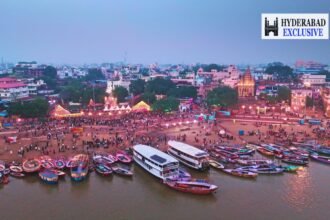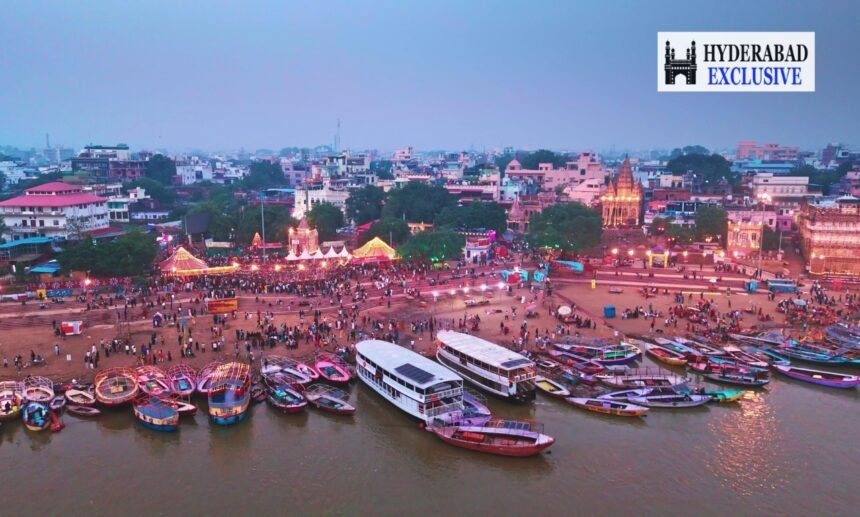
When people talk about Varanasi, they often mention its ghats — the long stone steps that lead down to the River Ganga. Among them, assi ghat varanasi holds a special place. It is not only one of the southernmost ghats in the city, but also one of the most approachable and lively. Here, you’ll see morning yoga sessions, evening prayers, students chatting, priests performing rituals, and travelers quietly watching the river flow.
In this article, we’ll gently explore what makes assi ghat varanasi meaningful — from its history to its daily rhythm — in a simple and easy way.
Understanding Assi Ghat Varanasi
Assi Ghat is located at the southern end of the city’s chain of ghats. It sits at the confluence of the River Ganga and the Assi River, a small stream that gives the ghat its name. Though the Assi River is not very visible today, its historical presence is deeply connected to the identity of this place.
Unlike some other ghats that feel crowded or intense, assi ghat varanasi has a slightly open and relaxed atmosphere. Many people consider it a starting point for exploring the ghats because it feels welcoming. Early in the morning, locals come here for a dip in the river, to practice yoga, or to simply sit in silence.
It’s not only a religious space. It’s also social and cultural. Students from nearby institutions, including Banaras Hindu University, often visit the ghat. This mix of tradition and youth energy gives the area a unique rhythm.
A Look at Assi Ghat Varanasi History
To understand the soul of this place, it helps to know a little about assi ghat varanasi history.
According to local belief, the name “Assi” comes from the Assi River. One popular legend connects the ghat to Goddess Durga. It is said that after defeating a demon, she threw her sword (called “asi”) at this spot, and the river emerged from that place. While this is part of mythology rather than documented history, it shows how deeply spiritual meaning is woven into the landscape.
Historically, the ghat has been mentioned in ancient texts associated with Varanasi. Over time, rulers and local patrons rebuilt and maintained the steps and surrounding structures. Like many ghats in Varanasi, Assi Ghat has seen centuries of rituals, festivals, and daily life unfolding along the riverbank.
In modern times, the ghat has become known for cultural events and community gatherings. During festivals, especially around Makar Sankranti and Dev Deepawali, the space fills with lamps, chants, and visitors. Even outside festival days, the ghat continues its quiet routine — which, in many ways, is more meaningful than large celebrations.
The Daily Rhythm of the Ghat
One of the simplest ways to understand assi ghat varanasi is to look at its daily routine.
Morning: Calm and Contemplation
Early mornings here feel gentle. Before sunrise, priests and locals gather near the water. Some perform rituals, offering water and flowers to the river. Others sit in meditation.
A well-known program called “Subah-e-Banaras” often takes place here, where music, Vedic chants, and yoga sessions are organized. The focus is not on performance, but on beginning the day mindfully.
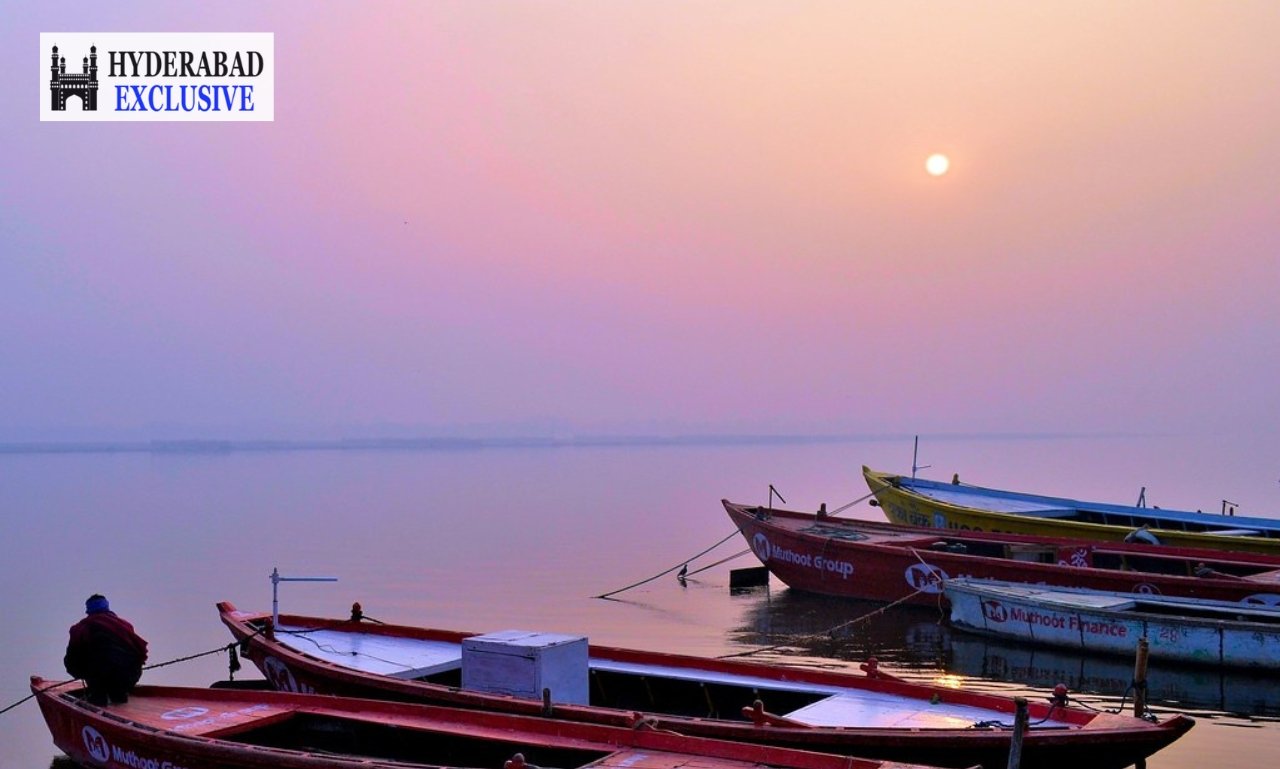
As the sun rises over the Ganga, the light changes slowly. Boats begin to move. Tea sellers set up their stalls. The ghat gradually shifts from quiet reflection to everyday movement.
Assi Ghat Varanasi Arti Time
Evenings at the ghat bring another important moment — the Ganga Aarti.
The assi ghat varanasi arti time is usually around sunset, though the exact timing may vary slightly depending on the season. Typically, it begins between 6:00 PM and 7:00 PM. It’s always a good idea to check locally for the current schedule.
During the aarti, priests stand facing the river with large brass lamps. They move them in circular patterns while chanting mantras. Bells ring softly. People gather on the steps, some sitting quietly, others recording the moment on their phones.
Compared to the larger and more formal aarti at Dashashwamedh Ghat, the ceremony at Assi Ghat feels slightly more intimate. The structure is similar — prayers, lamps, incense — but the setting is less crowded and easier to observe closely.
For many visitors, attending the aarti is less about spectacle and more about understanding how faith becomes part of daily life.
Cultural and Social Importance
What makes assi ghat varanasi interesting is how naturally different layers of life blend together.
You might see:
-
A priest performing a ritual.
-
A group of students discussing literature.
-
A family offering prayers.
-
Foreign visitors learning about Hindu customs.
-
Locals simply enjoying the river breeze.
This mix reflects Varanasi itself — ancient yet alive in the present. The ghat does not separate the sacred from the ordinary. Instead, both exist side by side.
Small cafés and bookshops in the nearby lanes add to the cultural feel. Conversations about philosophy, music, and travel often flow as freely as the river.
Visiting with Awareness
If you plan to visit assi ghat varanasi, it helps to approach it with respect and curiosity. Dress modestly, especially during rituals. Photography is common, but it’s thoughtful to avoid interrupting ceremonies.
The best times to visit are early morning for quiet observation or evening for the aarti. Midday can be warmer and less active.
You don’t need a detailed plan. Simply sitting on the steps and watching the river can be enough to understand why this place has drawn people for centuries.
Why Assi Ghat Continues to Matter
In a city filled with temples, chants, and history, assi ghat varanasi stands out not because it is grand, but because it feels balanced.
Its past — reflected in assi ghat varanasi history — connects it to mythology and tradition. Its present — seen in daily rituals and the regular assi ghat varanasi arti time — shows how those traditions continue in simple, steady ways.
It is a place where time feels layered rather than rushed. The river flows as it always has. People come and go. Rituals continue. Conversations begin and end.
And through it all, Assi Ghat remains what it has long been — a meeting point of water, faith, culture, and everyday life.
Explore More – IAMG GROUP × ZOMATO × boAt DETONATE THE ADVERTISING SUPERSTORM OF THE DECADE