
Table of Contents
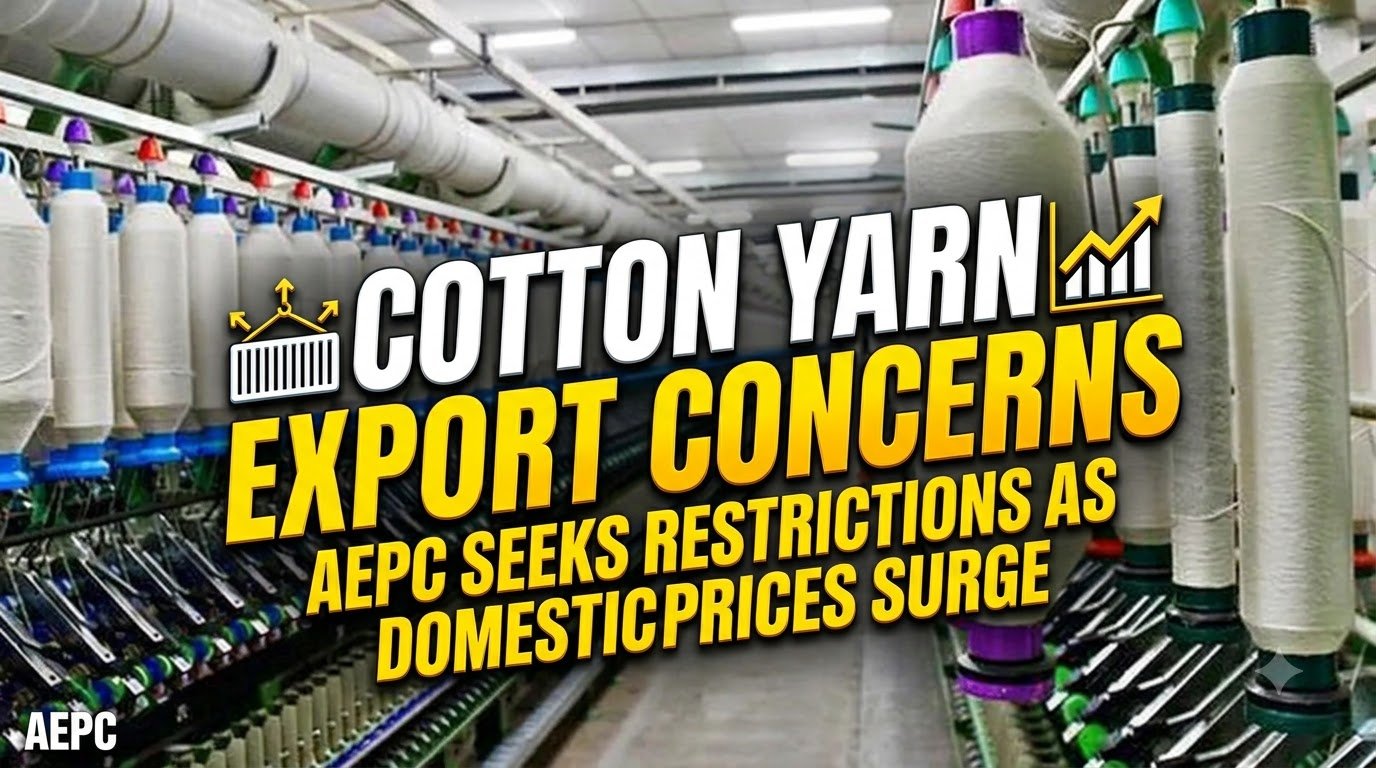
Cotton Yarn Export Concerns: AEPC Seeks Restrictions as Domestic Prices Surge
Cotton Yarn Export Concerns are growing among India’s apparel manufacturers as domestic cotton yarn prices have climbed sharply in recent months.
The Apparel Export Promotion Council (AEPC) has urged the Commerce Ministry and Textile Ministry to consider restricting cotton yarn exports, arguing that the steep rise in domestic prices is putting additional pressure on the country’s apparel and textile industry.
According to the industry body, cotton yarn prices have increased by nearly 60%, rising from around ₹250 per kg in early 2026 to approximately ₹400 per kg currently.
Why Are Cotton Yarn Prices Rising?
The sharp increase in cotton yarn prices has become a major concern for manufacturers that depend on the raw material for producing garments and other textile products.

When yarn prices rise significantly, manufacturers face higher production costs. For apparel exporters, this can be particularly challenging because they also compete with producers from other countries where input costs may be lower or more stable.
The AEPC believes that rising domestic yarn prices could eventually affect the competitiveness of India’s apparel exports.
AEPC Seeks Restrictions on Cotton Yarn Exports
The Apparel Export Promotion Council has asked the government to consider restricting exports of cotton yarn.
The industry’s argument is straightforward: if a larger portion of domestically produced yarn remains available within India, domestic manufacturers could potentially get better access to supplies and face less pressure from rising prices.
However, any restriction on exports would require the government to carefully balance the interests of yarn producers and exporters with those of domestic textile and apparel manufacturers.
Cotton Yarn Prices Rise Nearly 60%
The scale of the price increase is one of the main reasons behind the current Cotton Yarn Export Concerns.
According to the figures cited by the AEPC, prices have moved from approximately ₹250 per kg to around ₹400 per kg.
That represents an increase of roughly 60% from the earlier level.
For companies purchasing large quantities of yarn, even a relatively small increase per kilogram can translate into a substantial rise in overall production costs.
Impact on Apparel Manufacturers
Apparel manufacturers are among the businesses directly affected by higher yarn prices.
The cost of raw materials is an important component of garment manufacturing, and sudden increases can squeeze profit margins.
Companies may have limited ability to immediately pass higher costs on to customers, particularly in export markets where buyers can compare prices across multiple countries.
This creates a difficult situation for Indian apparel businesses that are already competing in a highly price-sensitive global market.
Why Exporters Are Worried
Indian apparel exporters operate in a competitive international environment.
Countries producing garments for global brands compete on factors such as pricing, quality, delivery times and supply-chain reliability.
If domestic yarn becomes significantly more expensive, Indian manufacturers could find it harder to offer competitive prices to international buyers.
This is why the AEPC is pushing for government intervention before higher input costs have a larger impact on the industry.
The Larger Textile Industry Impact
The issue extends beyond individual apparel manufacturers.
India’s textile industry includes cotton farmers, ginners, spinning mills, yarn manufacturers, fabric producers, garment manufacturers and exporters.
A change in one part of this chain can have an impact across other segments.
While yarn manufacturers may benefit from stronger prices and export demand, garment producers may face higher input costs.
The government therefore needs to consider the interests of different parts of the textile value chain before making any policy decision.
Balancing Domestic Supply and Exports
The debate over cotton yarn exports essentially comes down to balancing domestic availability with export opportunities.
Exporting yarn allows Indian producers to access international markets and earn foreign exchange.
At the same time, excessive export demand during a period of tight domestic supply can contribute to higher prices for manufacturers within India.
Any policy intervention would need to consider both sides of the equation.
What the Government Could Consider
The Commerce and Textile Ministries could examine domestic yarn availability, price trends, export volumes and the broader supply situation before deciding on any restrictions.
Possible policy responses could range from monitoring exports more closely to introducing temporary measures if authorities determine that domestic manufacturers are facing a serious supply problem.
The final decision would need to balance short-term price relief with the long-term interests of India’s textile industry.
Why This Matters for India’s Apparel Exports
India has a major textile and apparel industry with an established presence in international markets.
Maintaining competitive input costs is important if Indian manufacturers are to expand their global market share.
Higher yarn prices could make it harder for companies to compete on price, particularly in segments where profit margins are already relatively tight.
This makes the current Cotton Yarn Export Concerns an issue worth watching for both domestic manufacturers and international apparel buyers.
Could Restrictions Help?
Restricting cotton yarn exports could increase the amount of yarn available to domestic manufacturers, potentially easing supply pressure.
However, the effectiveness of such a measure would depend on the underlying reasons for the price increase.
If higher prices are being driven by factors elsewhere in the cotton supply chain, simply restricting exports may not completely solve the problem.
The government would therefore need to assess the broader market before taking action.
What Happens Next?
The next step will depend on how the Commerce and Textile Ministries respond to the AEPC’s request.
Industry participants will be watching domestic yarn prices, export volumes and government policy closely.
If prices continue to remain elevated, pressure for intervention could increase.
On the other hand, if market conditions improve and domestic supplies become more comfortable, the need for export restrictions could diminish.
Cotton Yarn Export Concerns: Key Takeaway
The latest Cotton Yarn Export Concerns highlight the pressure facing India’s apparel and textile manufacturers as domestic yarn prices have reportedly risen nearly 60%.
The AEPC has asked the Commerce and Textile Ministries to consider restricting cotton yarn exports, with prices increasing from around ₹250 per kg in early 2026 to approximately ₹400 per kg.
The core concern is that expensive yarn could raise production costs and make Indian apparel exporters less competitive globally.
The government now faces the challenge of balancing the interests of domestic manufacturers with those of yarn producers and exporters. Any decision on export restrictions could have implications across India’s wider textile supply chain.
Frequently Asked Questions (FAQs)
1. What are the current Cotton Yarn Export Concerns?
The main concern is that rising domestic cotton yarn prices are increasing production costs for India’s apparel and textile manufacturers.
2. What has the AEPC requested?
The Apparel Export Promotion Council has urged the Commerce and Textile Ministries to consider restricting cotton yarn exports.
3. How much have cotton yarn prices increased?
According to the figures cited by the AEPC, prices have increased from around ₹250 per kg to approximately ₹400 per kg, representing a rise of nearly 60%.
4. Why are apparel manufacturers concerned about higher yarn prices?
Higher yarn prices increase production costs and can put pressure on manufacturers’ profit margins, particularly when they are competing for international orders.
5. How could cotton yarn export restrictions help?
Restrictions could potentially increase domestic availability of yarn and reduce pressure on supplies available to Indian manufacturers.
6. Could export restrictions affect yarn producers?
Yes. Yarn producers that sell to international markets could be affected if their ability to export is restricted.
7. Why is cotton yarn important for India’s textile industry?
Cotton yarn is a key input for producing fabrics and garments, making its price and availability important across the textile supply chain.
8. Which ministries have been asked to consider the issue?
The Commerce Ministry and Textile Ministry have been urged to examine the concerns raised by the AEPC.
9. Could higher yarn prices affect India’s apparel exports?
Yes. Higher input costs could make Indian apparel products less competitive in international markets, particularly where buyers are highly price-sensitive.
10. What should the industry watch next?
The key developments will be government action, domestic cotton yarn prices, export volumes and changes in supply and demand across the textile sector.

