
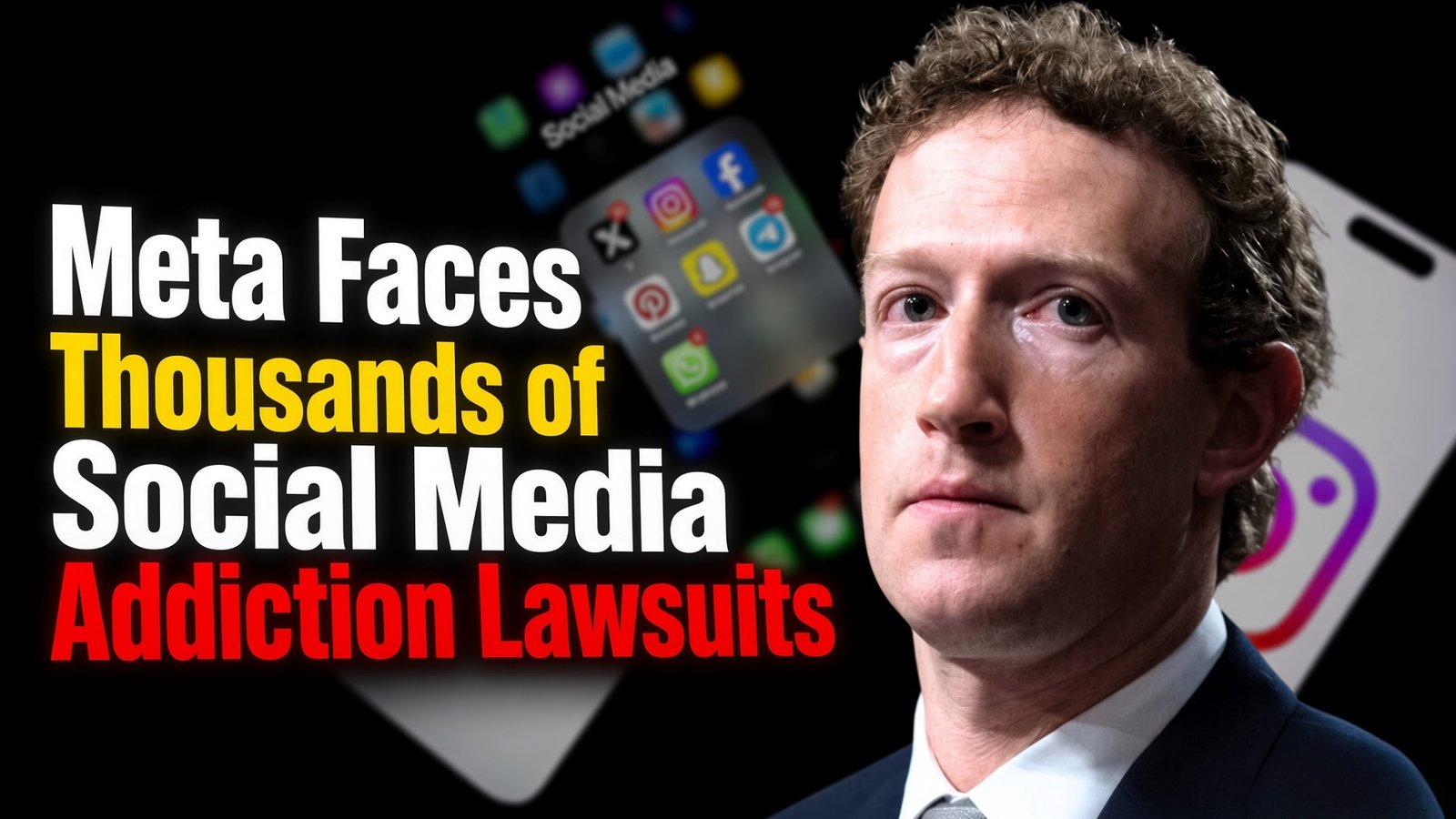
Meta Faces Thousands of Social Media Addiction Lawsuits
Major social media companies are facing a growing legal battle in the United States after a federal appeals court allowed thousands of lawsuits alleging that their platforms were designed to encourage addictive use.
The cases involve claims that social media companies deliberately used platform features and recommendation systems to keep users engaged for longer periods. Many of the lawsuits focus particularly on the impact of these practices on children and teenagers.
US Appeals Court Allows Lawsuits to Continue
The ruling by the 9th US Circuit Court of Appeals is an important development in the ongoing legal fight.
The companies had argued that Section 230 of the Communications Decency Act should protect them from the lawsuits. However, the appeals court rejected their attempt to stop the cases at this stage.
The decision does not mean the companies have been found responsible for addiction. Instead, it allows the plaintiffs to continue presenting their claims through the legal process.
What Are the Lawsuits Claiming?
The lawsuits allege that social media platforms use design features intended to maximise engagement and keep people coming back.
According to the claims, recommendation algorithms, notifications and other engagement-focused features can encourage prolonged and compulsive use.
A significant number of cases involve young users and their families, who argue that excessive social media use has contributed to various problems affecting their wellbeing.
Meta Among the Major Companies Facing Claims
Meta, the company behind Facebook and Instagram, is among the major technology companies facing these lawsuits.
The legal cases represent a growing challenge for social media businesses, particularly as governments, parents and policymakers continue to examine how online platforms affect younger users.
Meta and other companies have disputed the allegations and continue to defend their platforms in court.
Why the Ruling Is Important
The latest decision could have major implications for the technology industry.
If the lawsuits eventually result in successful claims, settlements or new legal standards, social media companies could face greater pressure to change how certain features are designed.
It could also influence how platforms approach user engagement, recommendation algorithms and protections for children.
However, the current ruling is only a procedural step. The companies have not been found liable simply because the lawsuits have been allowed to continue.
Growing Focus on Social Media and Young Users
The lawsuits come amid increasing concern about how social media affects children and teenagers.
Parents and policymakers have raised questions about whether platforms do enough to protect younger users from excessive screen time, harmful content and engagement features that encourage repeated use.
The legal proceedings could provide courts with an opportunity to examine these issues in greater detail.
Final Thoughts
The US appeals court decision represents a significant development in the growing legal battle over social media addiction and platform design.
Thousands of lawsuits against major social media companies can now continue, with plaintiffs alleging that engagement-focused features were designed to encourage excessive use.
The companies still have opportunities to defend themselves, and the latest ruling does not establish liability. However, the cases could eventually influence how social media platforms are designed and how companies protect younger users.
Frequently Asked Questions
What are the social media addiction lawsuits about?
The lawsuits allege that major social media companies designed their platforms and features in ways that encourage excessive or addictive use.
How many lawsuits are involved?
The appeals court ruling allows thousands of lawsuits to continue through the legal process.
Is Meta one of the companies facing these lawsuits?
Yes. Meta, which owns Facebook and Instagram, is among the major companies involved in the litigation.
Has Meta been found guilty?
No. The court has not found Meta liable for social media addiction. The ruling allows the lawsuits to proceed.
Why are children and teenagers a major focus?
Many plaintiffs argue that younger users can be particularly vulnerable to engagement-focused platform features and excessive social media use.
What did the appeals court decide?
The court rejected an attempt by the companies to stop the lawsuits at this stage, allowing the cases to move forward.
Could the lawsuits change social media platforms?
Potentially. Future court decisions, settlements or regulatory action could put pressure on companies to change certain platform features and strengthen protections for younger users.
- Google’s New Android Vitals Metric Will Assist Android App Developers in Determining Abnormal Battery Drain
- Launched in India, the Lenovo Legion Tower 5i features an RTX 50 Series GPU and an Intel Core Ultra 9 processor.
- Google is bringing camera and screen-sharing capabilities to all Android devices with Gemini Live.
- Release of OpenAI o3 and o4: Mini AI Models with Visual Reasoning Features

