
Table of Contents
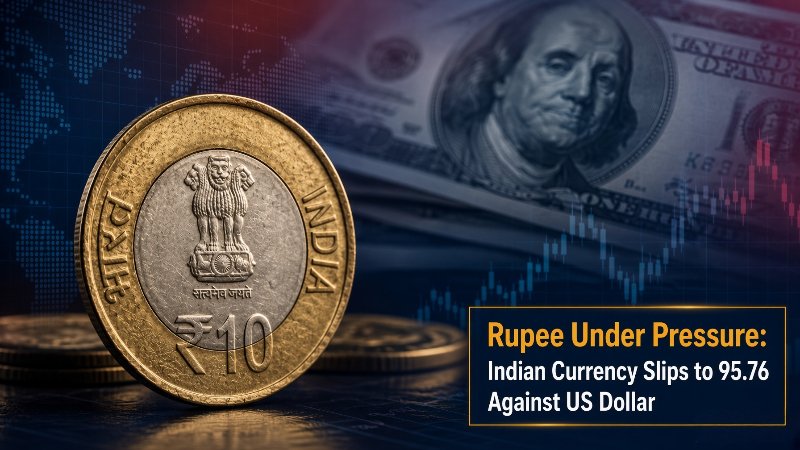
Rupee Under Pressure: Indian Currency Slips to 95.76 Against US Dollar
Rupee Under Pressure: The Indian currency remained under pressure on Wednesday, August 19, 2026, with the rupee falling to around 95.76 against the US dollar. Rising crude oil prices, strong dollar demand and continued uncertainty around foreign capital flows have weighed on the currency. The rupee eventually closed at 95.7525 per US dollar, compared with 95.68 in the previous session.
Why Is the Rupee Falling?
The primary reason behind the Rupee Under Pressure is the sharp rise in crude oil prices. Brent crude has climbed close to $92 per barrel, increasing concerns about India’s import bill because the country depends heavily on imported crude oil.
Higher oil prices generally increase demand for US dollars from Indian oil importers. This creates additional pressure on the rupee and can also raise concerns about inflation and India’s current account balance.
Geopolitical Tensions Add to Currency Pressure
Ongoing tensions involving the United States and Iran have added another layer of uncertainty to global markets.

Concerns surrounding the Strait of Hormuz, a key route for global energy shipments, have kept oil prices elevated. Any further disruption to energy supplies could push crude prices higher and increase pressure on oil-importing economies such as India.
RBI Steps In to Support the Rupee
The Reserve Bank of India (RBI) has been actively monitoring the foreign exchange market and is reportedly intervening to prevent excessive volatility.
On Wednesday, state-run banks were seen selling US dollars, which traders believed was being done on behalf of the RBI. The intervention helped limit the rupee’s decline as it approached the psychologically important 96 per dollar level.
The RBI’s objective is generally to manage excessive volatility rather than defend a particular exchange-rate level.
Foreign Capital Outflows Remain a Concern
Foreign investment flows are another factor influencing the rupee.
When foreign investors sell Indian equities and move money out of the country, demand for US dollars can increase as investors convert their rupee holdings back into foreign currency. This can add to pressure on the Indian currency.
However, recent data has also shown signs of renewed foreign buying in Indian equities, which could provide some support to the rupee if sustained.
What Does a Weak Rupee Mean for India?
A weaker rupee can have both positive and negative effects on the Indian economy.
For import-heavy sectors, a weaker currency increases the cost of imported commodities, machinery and raw materials. Higher crude prices combined with rupee depreciation can particularly affect fuel costs and inflation.
On the other hand, sectors such as information technology and other exporters can benefit because they earn a significant portion of their revenue in US dollars.
What Should Investors Watch Next?
Markets will closely monitor crude oil prices, foreign investment flows, RBI intervention and developments in West Asia.
If crude oil remains elevated and geopolitical tensions intensify, the rupee could face further pressure. However, continued RBI intervention and stronger foreign capital inflows could help stabilize the currency.
For now, the Rupee Under Pressure situation highlights the impact that global oil prices and geopolitical developments can have on India’s currency.
Conclusion
The Indian rupee’s move toward 95.76 per US dollar reflects growing pressure from elevated crude oil prices, dollar demand and geopolitical uncertainty.
The RBI’s intervention has helped prevent sharper movements, but the currency’s near-term direction will depend heavily on oil prices, global risk sentiment and foreign investment flows.
FAQ
Why is the Indian rupee falling?
The rupee is under pressure mainly because of high crude oil prices, strong dollar demand and geopolitical uncertainty surrounding the Middle East.
What was the rupee’s level against the dollar?
The Indian rupee closed at 95.7525 per US dollar on August 19, 2026.
Why do high crude oil prices affect the rupee?
India imports a large amount of crude oil. Higher oil prices increase the country’s demand for US dollars and can therefore put pressure on the rupee.
How is the RBI supporting the rupee?
The RBI has been intervening in the foreign exchange market, with state-run banks reportedly selling dollars on its behalf to limit excessive currency volatility.
Does a weak rupee benefit any sectors?
Yes. Export-oriented sectors, particularly IT companies with significant US-dollar revenue, can benefit from a weaker rupee, although the overall impact varies by company.

