
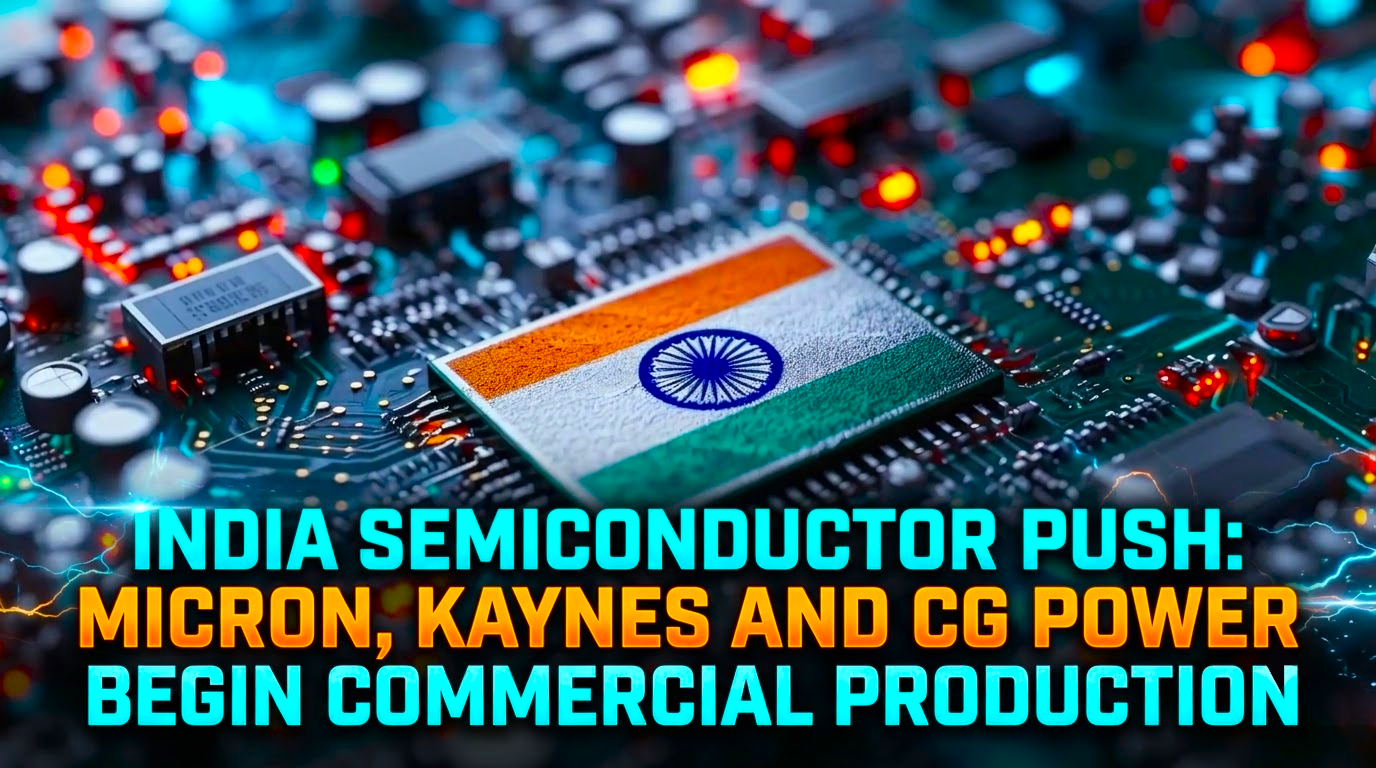
India Semiconductor Push Gains Momentum as Micron, Kaynes and CG Power Begin Production
India semiconductor push has reached an important milestone as three major semiconductor facilities linked to Micron, Kaynes and CG Power have commenced commercial production.
The development marks a significant step in India’s effort to build a stronger domestic semiconductor ecosystem under its broader $20 billion semiconductor strategy.
With 12 semiconductor fabrication and packaging plants approved, the beginning of commercial production at three facilities suggests that India’s chip ambitions are gradually moving from investment announcements and government plans to actual manufacturing activity.
India Semiconductor Push Moves Into a New Phase
For years, India has been a major consumer and assembler of electronic products while relying heavily on other countries for semiconductor components.
That situation is slowly beginning to change.
The latest production milestone shows that India is developing capabilities beyond electronics assembly and moving towards a more established position in the global semiconductor value chain.
The involvement of both global and Indian companies is particularly important. International semiconductor expertise can bring technology and manufacturing experience, while domestic companies can help create a wider local supply chain.
12 Semiconductor Facilities Approved
Under India’s semiconductor development strategy, 12 semiconductor fabrication and packaging facilities have been approved.
These projects cover different parts of the semiconductor ecosystem, including manufacturing, assembly, testing and packaging.
Building several facilities instead of relying on a single project is important because a successful semiconductor industry requires an interconnected network of manufacturers, suppliers and technology partners.
The start of commercial production at three facilities provides an early foundation for this ecosystem.
Micron’s Contribution to India’s Semiconductor Industry
Micron is one of the major global semiconductor companies participating in India’s chip manufacturing ambitions.
Its presence is important because the company brings extensive experience in semiconductor and memory technologies.
The development of Micron’s facility in India has also helped attract attention to the country’s potential as a semiconductor manufacturing destination.
As production expands, the facility could contribute not only to direct semiconductor activity but also to the development of supporting businesses around it.
Kaynes Strengthens Domestic Semiconductor Manufacturing
Kaynes represents the growing role of Indian companies in the country’s semiconductor ambitions.
The company has been expanding its capabilities in semiconductor-related manufacturing as demand for electronic components continues to increase.
The participation of domestic companies is essential for building a sustainable Indian semiconductor ecosystem.
India’s long-term goal cannot depend entirely on foreign manufacturers. Local companies need to develop expertise, manufacturing capacity and relationships across the semiconductor supply chain.
CG Power Adds Another Major Player
CG Power is another important company contributing to India’s semiconductor manufacturing expansion.
Its semiconductor operations add further capacity to the country’s growing chip ecosystem.
Having multiple companies involved in semiconductor production can create a stronger industrial base and encourage more suppliers and technology companies to enter the market.
Over time, this could lead to the development of specialised semiconductor clusters across different parts of India.
Why Semiconductor Manufacturing Matters
Semiconductors are at the heart of modern technology.
They are used in smartphones, computers, automobiles, telecommunications equipment, industrial machinery, defence systems and artificial intelligence infrastructure.
Almost every major technology industry depends on chips.
This makes semiconductor manufacturing not just an economic opportunity but also a strategic priority.
Countries around the world are investing heavily in domestic chip production because disruptions in global semiconductor supply chains can affect entire industries.
For India, developing local capabilities can provide greater supply-chain resilience while creating opportunities in a high-value technology sector.
From Electronics Assembly to Chip Manufacturing
One of the most important goals of the India semiconductor push is to move the country higher up the electronics value chain.
India has already emerged as an important electronics manufacturing and assembly destination.
However, assembling finished products is different from producing the sophisticated components that power them.
Semiconductor manufacturing and advanced packaging require specialised technology, highly controlled environments, skilled engineers and significant capital investment.
The development of these capabilities could allow India to capture more value from its growing electronics industry.
AI Boom Is Increasing Chip Demand
The global artificial intelligence boom has made semiconductor manufacturing even more important.
AI applications require enormous amounts of computing power, which in turn drives demand for advanced processors, memory chips and data-centre infrastructure.
As technology companies continue investing heavily in AI, demand for semiconductor products is expected to remain a major global trend.
India’s semiconductor expansion is therefore taking place at a time when the world is looking for more reliable and diversified chip supply chains.
This could create opportunities for India to attract additional semiconductor investments.
Benefits for India’s Electronics Industry
A stronger semiconductor industry could have a wider impact on India’s electronics sector.
Domestic manufacturers could eventually have access to a larger local supplier base, reducing some dependence on imported components.
It could also encourage companies producing semiconductor equipment, materials, testing systems and other specialised products to establish operations in India.
This creates what economists often describe as an ecosystem effect.
When one major manufacturing facility is established, it can attract several supporting businesses around it.
Over time, this can create industrial clusters and strengthen the overall supply chain.
Opportunities for Indian MSMEs
The semiconductor industry could also create new opportunities for Indian MSMEs.
While semiconductor fabrication itself requires enormous investments, smaller companies can participate in supporting areas.
These may include equipment maintenance, specialised components, logistics, engineering services, packaging-related activities and other industrial requirements.
A deeper network of MSMEs could make India’s semiconductor ecosystem more competitive and less dependent on overseas suppliers.
This is why the success of the semiconductor strategy will not be measured only by the number of factories built.
The development of a wider domestic supply chain will be equally important.
Semiconductor Manufacturing Could Create Skilled Jobs
Another major benefit of the India semiconductor push is the potential creation of highly skilled employment.
Semiconductor manufacturing requires engineers, technicians, researchers, equipment specialists and professionals trained in advanced manufacturing processes.
As more facilities become operational, demand for specialised talent is likely to increase.
This could encourage Indian universities and technical institutions to expand semiconductor-related education and training.
Over time, a stronger talent pool could become one of India’s biggest advantages in attracting additional semiconductor investments.
India’s Defense Sector Could Also Benefit
Semiconductors are increasingly important for national security and defense technologies.
Modern military systems depend on advanced electronics, sensors, communications equipment and computing systems.
Building greater domestic semiconductor capabilities can therefore strengthen India’s strategic technology base.
It can also reduce dependence on external supply chains for certain critical electronic components.
This makes the semiconductor industry relevant not only to consumer electronics but also to aerospace, defense and strategic technologies.
Challenges Ahead
Despite the progress, India still has a long journey ahead before it can compete with the world’s largest semiconductor manufacturing hubs.
Chip manufacturing is extremely capital-intensive and technically demanding.
Facilities require reliable power, high-quality water, specialised equipment and strict environmental and manufacturing controls.
India will also need to continue developing skilled talent and attracting global technology partners.
Another challenge will be creating enough demand and supporting infrastructure to ensure that new facilities can operate efficiently over the long term.
Why Commercial Production Is a Big Milestone
The start of commercial production at three facilities is important because it provides tangible evidence that India’s semiconductor strategy is moving forward.
Investment announcements are only the first stage of building a manufacturing ecosystem.
Actual production demonstrates that infrastructure, equipment, workforce and operational systems are beginning to come together.
If more of the approved facilities reach commercial production in the coming years, India’s position in the global semiconductor supply chain could become considerably stronger.
What This Means for India’s Global Position
India wants to establish itself as a major destination for electronics and semiconductor manufacturing.
The country already has a large domestic market, a growing electronics industry and a substantial pool of engineering talent.
The semiconductor push adds another layer to that manufacturing story.
If India can successfully combine domestic demand with export-oriented production, the country could become an important part of global semiconductor supply chains.
This could also help attract additional investments from companies looking to diversify their manufacturing operations.
What Comes Next?
The next major challenge is scaling India’s semiconductor ecosystem.
More approved projects will need to move towards construction, testing and commercial production.
At the same time, India will need to strengthen its domestic supply chain, develop specialised talent and continue attracting technology partnerships.
The success of the strategy will ultimately depend on whether India can build an ecosystem rather than just individual semiconductor facilities.
For now, the commercial production achieved by Micron, Kaynes and CG Power represents an encouraging step.
The India semiconductor push is moving from ambition to execution, and the coming years could determine whether the country can establish itself as a serious global player in semiconductor manufacturing.
Frequently Asked Questions (FAQs)
1. What is the India semiconductor push?
The India semiconductor push refers to the country’s efforts to develop domestic semiconductor manufacturing, packaging, testing and supporting supply chains through government incentives and private-sector investment.
2. How much is India’s semiconductor strategy worth?
India’s broader semiconductor strategy involves an investment push of approximately $20 billion aimed at developing domestic semiconductor capabilities.
3. How many semiconductor plants have been approved in India?
According to the latest industry data provided, 12 semiconductor fabrication and packaging plants have been approved.
4. Which companies have started commercial semiconductor production?
Three major facilities associated with Micron, Kaynes and CG Power have commenced commercial production.
5. Why is semiconductor manufacturing important for India?
Semiconductors are essential for smartphones, automobiles, computers, telecommunications, defense systems and AI infrastructure. Domestic production can strengthen supply-chain resilience and reduce dependence on imports.
6. Is India already a major semiconductor manufacturing hub?
India is still developing its semiconductor manufacturing ecosystem. The beginning of commercial production at multiple facilities represents an important step towards becoming a larger global semiconductor manufacturing destination.
7. How can the semiconductor industry benefit Indian MSMEs?
MSMEs can potentially participate in areas such as equipment, engineering services, specialised components, logistics, testing and other supporting activities required by semiconductor manufacturers.
8. Will the semiconductor push create jobs in India?
The expansion of semiconductor facilities is expected to create demand for engineers, technicians, researchers and other specialised professionals, while also supporting jobs in related industries.
9. How is AI increasing the importance of semiconductors?
AI systems require large amounts of computing power and memory, increasing demand for advanced semiconductors. The global AI boom is therefore contributing to greater investment in chip manufacturing and infrastructure.
10. What is the next step for India’s semiconductor industry?
The next step is to bring more approved facilities into commercial production while developing India’s domestic supply chain, skilled workforce and advanced semiconductor capabilities.
- According to EA, Split Fiction on the Switch 2 can be shared via GameShare with Nintendo Switch users.
- Apple iPhone 17 Pro Max Expected Release, Specs, and Price Rumors Ahead of September Event
- Meta Faces Thousands of Social Media Addiction Lawsuits
- iQOO Z10R Price in India – Full Specifications & Review 2025

